Have you opened your dishwasher after a full cycle only to find standing water at the bottom? A dishwasher that won’t drain is one of the most common appliance problems homeowners face. While some drainage issues are easy to fix, others require professional attention to prevent water damage and costly repairs.
In this guide, we’ll explain the most common reasons your dishwasher isn’t draining, simple troubleshooting steps you can try at home, and when it’s time to call a professional dishwasher repair technician.
Table of Contents
ToggleWhy Is Your Dishwasher Not Draining?
A properly working dishwasher should drain all the dirty water at the end of every wash cycle. If water remains inside the tub, something is preventing the drainage system from working correctly.
The problem could be as simple as a clogged filter or as serious as a failed drain pump. Identifying the cause early can help prevent unpleasant odours, poor cleaning performance, and water leaks.
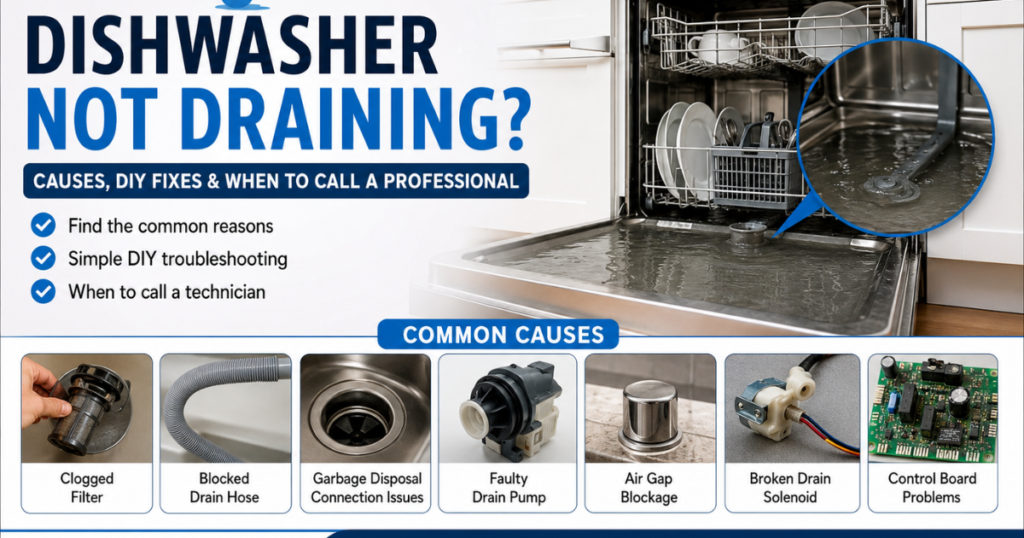
Common Causes of a Dishwasher That Won’t Drain-
1. Clogged Dishwasher Filter
The filter catches food particles, grease, and debris during every wash cycle. Over time, it can become blocked, preventing water from flowing out properly.
Signs include:
- Standing water after the cycle
- Dirty dishes
- Bad odours
- Slow drainage
Cleaning the filter regularly can often solve this issue.
2. Blocked Drain Hose
The drain hose carries wastewater from your dishwasher to your home’s plumbing system.
Food particles, grease, or mineral deposits can clog the hose, restricting water flow.
If the hose is kinked or damaged, drainage may stop completely.
3. Faulty Drain Pump
The drain pump pushes wastewater out of the dishwasher.
If the pump motor fails or becomes blocked by debris, the dishwasher may leave water inside after every cycle.
Common symptoms include:
- Humming noises
- Water remaining after washing
- Incomplete drain cycles
4. Garbage Disposal Connection Problems
If your dishwasher connects to a garbage disposal, a blockage or an unremoved knockout plug can prevent proper drainage.
This issue is especially common after installing a new garbage disposal.
5. Air Gap Blockage
Some homes have an air gap installed near the kitchen sink.
When this component becomes clogged with grease or food debris, the dishwasher may struggle to drain properly.
6. Faulty Drain Valve or Solenoid
Older dishwashers may use a drain valve or solenoid to control water flow.
If these components fail, wastewater can remain inside the appliance after every cycle.
7. Control Board or Electrical Problems
Modern dishwashers rely on electronic control boards to manage the drain cycle.
A faulty control board or damaged wiring may stop the dishwasher from activating the drain pump.
How to Fix a Dishwasher That Won’t Drain-
Before attempting any repairs, disconnect the power supply to the dishwasher.
Step 1: Remove Standing Water
Use a cup or small container to remove excess water from the bottom of the dishwasher.
Dry the remaining water with towels or a sponge.
Step 2: Clean the Filter
Remove the dishwasher filter according to your manufacturer’s instructions.
Wash it with warm water and mild dish soap.
Reinstall the filter securely before running another cycle.
Step 3: Check the Drain Hose
Inspect the hose for:
- Kinks
- Food blockages
- Grease buildup
- Damage
Flush the hose if necessary.
Step 4: Inspect the Garbage Disposal
If your dishwasher drains through the garbage disposal:
- Run the disposal.
- Check for blockages.
- Confirm the knockout plug was removed if the disposal is newly installed.
Step 5: Run a Test Cycle
After cleaning the filter and checking the hose, run a short wash cycle.
If water drains normally, the issue has likely been resolved.
When Should You Call a Professional?
DIY maintenance works for minor blockages, but some drainage problems require professional diagnosis.
Contact a technician if:
- Water remains after every cycle.
- The dishwasher makes unusual grinding or humming noises.
- You notice water leaking onto the floor.
- The appliance displays error codes.
- The drain pump appears faulty.
- Cleaning the filter doesn’t solve the problem.
Continuing to use a dishwasher with drainage issues can cause additional damage to internal components.
Common Dishwasher Drain Problems We See in Brampton Homes
At Bravora Appliance Repair, we’ve helped many homeowners across Brampton with dishwasher drainage problems.
Some of the most common issues we encounter include:
- Food debris blocking filters
- Grease buildup inside drain hoses
- Hard water mineral deposits
- Worn drain pumps
- Faulty drain valves
- Drainage problems caused by aging appliances
Ontario’s hard water can also contribute to mineral buildup inside dishwashers, reducing drainage efficiency over time. Regular maintenance helps prevent many of these issues.
When Should You Call a Professional?
DIY maintenance works for minor blockages, but some drainage problems require professional diagnosis.
Contact a technician if:
- Water remains after every cycle.
- The dishwasher makes unusual grinding or humming noises.
- You notice water leaking onto the floor.
- The appliance displays error codes.
- The drain pump appears faulty.
- Cleaning the filter doesn’t solve the problem.
Continuing to use a dishwasher with drainage issues can cause additional damage to internal components.
How to Prevent Dishwasher Drain Problems
A few simple habits can help keep your dishwasher working efficiently.
- Clean the filter every month.
- Scrape excess food from dishes before loading.
- Avoid overloading the dishwasher.
- Use the recommended dishwasher detergent.
- Run a dishwasher cleaner every few months.
- Inspect the drain hose during routine maintenance.
Preventive care can extend the life of your dishwasher and reduce unexpected repair costs.
Frequently Asked Questions
Why is there standing water at the bottom of my dishwasher?
Standing water is usually caused by a clogged filter, blocked drain hose, faulty drain pump, or plumbing issue.
Can I fix a dishwasher that won’t drain myself?
Yes. Cleaning the filter and checking the drain hose are safe first steps. If the problem continues, professional diagnosis is recommended.
Is it safe to use a dishwasher that isn’t draining?
No. Continuing to use the appliance may cause leaks, unpleasant odours, poor cleaning performance, or additional internal damage.
How often should I clean my dishwasher filter?
Most manufacturers recommend cleaning the filter every month, or more often if you use the dishwasher frequently.
How long does dishwasher drain repair take?
Many drainage problems can be diagnosed and repaired during a single service visit, depending on the cause and whether replacement parts are required.
Need Professional Dishwasher Repair in Brampton?
If your dishwasher still isn’t draining after basic troubleshooting, it’s best to have it inspected by an experienced technician before the problem leads to further damage or costly repairs.
At Bravora Appliance Repair, we provide reliable dishwasher repair services for homeowners throughout Brampton. Our certified technicians accurately diagnose drainage issues, explain the problem clearly, and carry out dependable repairs using quality replacement parts whenever required.
Whether your dishwasher has standing water, a clogged drain, a faulty drain pump, or recurring drainage problems, we’re committed to restoring your appliance’s performance with prompt, professional service and lasting repair solutions.
Schedule your dishwasher repair with Bravora Appliance Repair and get your kitchen back to running smoothly.